Published30 September 2026
A proposed document from the secretary of state to resolve the Drumcree dispute is "not acceptable", according to a Democratic Unionist Party (DUP) MP.
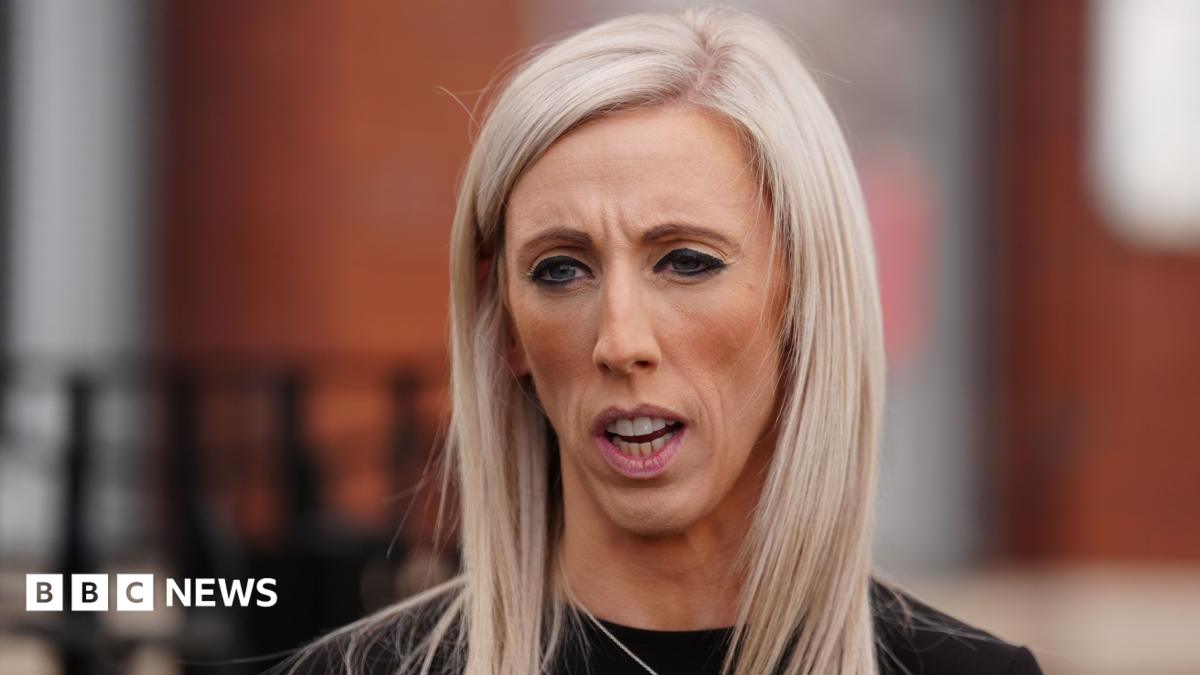
The comments from Carla Lockhart came as the Garvaghy Road Residents' Coalition (GRRC) held out the prospect of an arrangement to resolve the dispute.
Breandán Mac Cionnaith emerged from talks at Hillsborough Castle on Wednesday afternoon saying the GRRC "received a document from the secretary of state" but added: "Let's say if it's accepted by the Orange Order, it'll be accepted by us."
Talks with Sir Chris Bryant came after lawyers for the GRRC issued a fresh legal bid on Tuesday to try to prevent the march from going ahead.
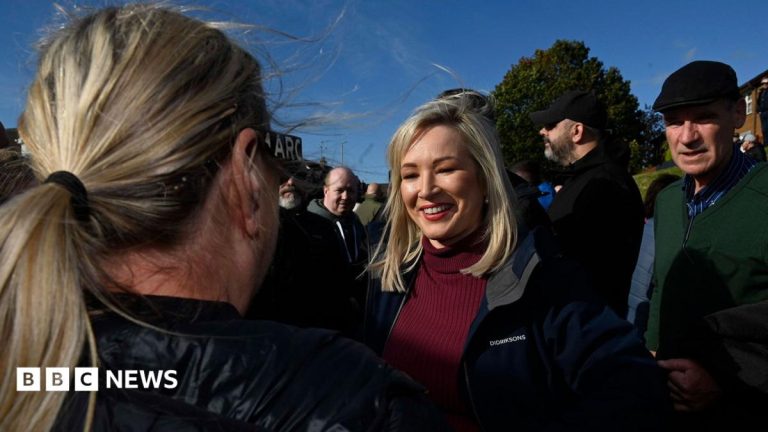
Lockhart however, addressing a loyalist rally in Portadown on Wednesday evening in support of the Drumcree Orangemen, said they would not accept any deal that sees them "walk away" from their right to parade down the Garvaghy Road.
The Upper Bann MP said: "We are more determined than ever to ensure that the Portadown District walk down the Garvaghy Road and I can tell you now, there'll be no capitulation on the part of the Portadown district.
"They will not accept a deal where they walk away.
"They have the legal right to walk on the Garvaghy Road and it's time for Jon Boutcher to get on and do his job and police the lawful determination," the Press Association reported.
Loyalist activist Jamie Bryson, who is legal adviser to Portadown district, also pushed back on suggestions an agreement was close, insisting the loyal order members are "not doing any deal".
Separately members of the Orange Order held face to face talks with Police Service of Northern Ireland (PSNI) Chief Constable Jon Boutcher on Wednesday evening.
Portadown District Master Nigel Dawson told members outside Drumcree church that they had received confirmation that the parade determination is still alive.
Some time later Orangemen again attempted to set off on their walk from Drumcree church but were stopped at police lines.
The parade was due to take place on Sunday along Garvaghy Road.
'I'm not going to jeopardise anything'
Mac Cionnaith meanwhile said that he was not going to discuss what was contained in the proposals aimed at securing a deal.
His comments followed a meeting on Wednesday evening with Garvaghy Road residents.
"It is on the table at the moment, I am not going to do anything to jeopardise that, by speaking publicly on it," he added.
"There is another day's process to go here, I am not going to jeopardise anything by breaking that confidentiality."
He said it was a "discussion document and there will be discussions around it".
He confirmed that he also met the chief constable on Wednesday evening.
"We got the chief constable's position, he got our position and he like ourselves is aware that there is a process under way at Hillsborough and he is not going to do anything to jeopardise that process either, like ourselves."
The march was given the go ahead after three separate legal hearings over the course of 13 hours late on Saturday and into the early hours of Sunday morning.
On Tuesday, a spokesperson for the residents told supporters that mediation was "dead in the water", external.
However on Wednesday, Sir Chris said the process was "very much alive" and that "we need to wish for a good successful outcome here".
Representatives from the GRRC and the Portadown Orange Order both took part in the talks earlier on Wednesday, waiting in separate rooms beforehand.
Sir Chris said all participants had been "very frank with each other, open and honest" which he believed was the best way to get to a "successful resolution".
What is the Garvaghy Road dispute all about? Published1 day ago
What is the Garvaghy Road dispute all about?
Parading, policing and power sharing collide amid Drumcree dispute Published2 days ago
Parading, policing and power sharing collide amid Drumcree dispute
Drumcree parade resolution not going to be easy – NI secretaryPublished1 day ago
Drumcree parade resolution not going to be easy – NI secretary
Senior members from the Orange Order, including Nigel Dawson and Deputy District Master Alastair Power, were in the group that met the secretary of state.
They were accompanied by loyalist activist Jamie Bryson.
Speaking after their meeting, Dawson said the secretary of state had been left "in no doubt" that the Orange Order's position continued to be that he and the chief constable must apply the law to allow the march to take place.
The group returned later and stayed for an hour around 17:00 BST but Orange Order district master Nigel Dawson declined to comment on matters discussed.
Members of the GRRC meanwhile, including Mac Cionnaith, also arrived at Hillsborough Castle on Wednesday morning.
He emerged some seven hours after meeting the secretary of state and said the residents' group had been presented a document.
"Obviously I can't divulge what is in it but if it's accepted by the Orange Order, it will be accepted by us," he said.
Protesters remain at Garvaghy Road
Protesters remain at the Garvaghy Road on Wednesday night.
Earlier, Paul and Charlie told BBC News NI that they have camped out for nearly 24 hours.
They said they were relieved to see the sun come out today after the "wild" weather overnight that saw the protest site battered by wind and rain.
When did the Drumcree dispute begin?
The Orange Order, the most prominent of the loyal orders associated with Protestants in Northern Ireland, holds thousands of parades every year and the vast majority pass off without incident.
However, many Catholics see the marches as sectarian and object to them passing through, or close to, Catholic or nationalist areas.
The Garvaghy Road had been part of the Drumcree route, but by the mid 1990s nationalist residents protested against the parade. The row sparked some of the most serious public disorder in Northern Ireland's history and was linked to several murders.
The Drumcree dispute was one of Northern Ireland's most serious parading disputes during the 1990s, when stand-offs over attempts by the Orange Order to march along the Garvaghy Road were accompanied by riots, roadblocks and killings.
When the Orange Order was prevented by police from walking down the route in July 1995, there was a tense stand-off. It was the same for the next three years.
Violence related to the dispute resulted in riots, roadblocks and murders across Northern Ireland.
In 1998, the newly-established Parades Commission ruled that the Orange Order should not march down the road – a decision upheld for the last 28 years.
The row reemerged last month after a court case in which a ruling by the Parades Commission was overturned, and a fresh application was lodged.
The commission decided the march could go ahead with restrictions in place.
However that decision was challenged in several Belfast courts Saturday, before finally being given the go ahead just hours before it was due to take place.
About the Author

More coverage
Drumcree parade will not be policed at any cost – PSNI Chief Constable Jon Boutcher
Graduated Driver Licensing: Northern Ireland’s young drivers first in UK to get new driving licensing laws

Doctors say radical plan to merge Scotland’s health boards should be scrapped