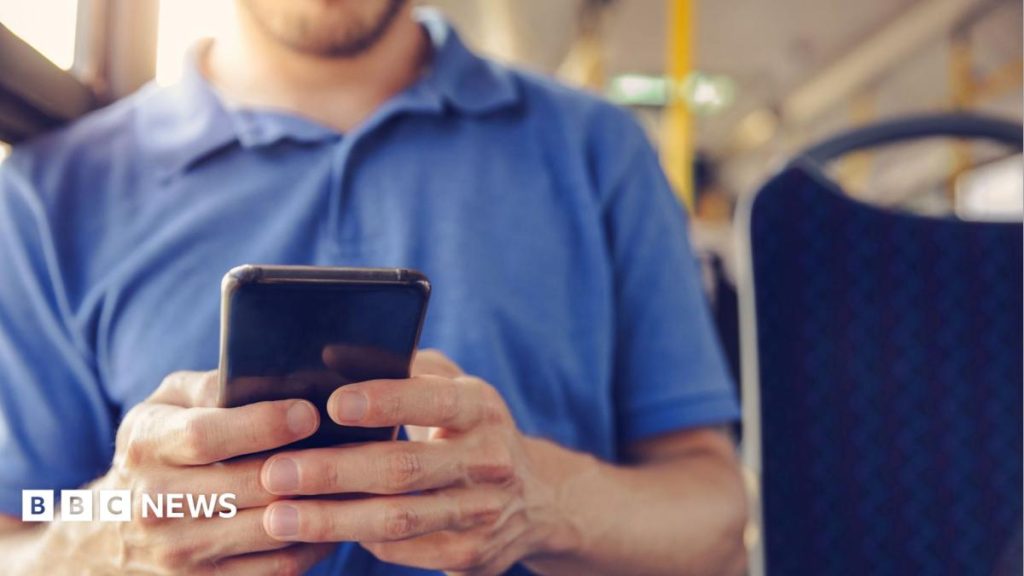
Passengers who play loud music on buses in England could be fined up to £100 under an attempt by the government to crack down on antisocial behaviour.
The measures also seek to tackle littering, vaping and threatening behaviour to help improve journeys on all forms of public transport.
Offenders on buses could be issued with the fines under new powers for local authorities.
A national campaign asking rail passengers "share the carriage, not the noise" is also being launched. The proposed crackdown has been welcomed by campaigners, but some have questioned how it can be enforced.
"We've all been on the train when someone starts blasting music or videos from their phone. It gets on your nerves and can quickly spoil the journey," said Prime Minister Andy Burnham.
Under existing powers, those who are asked to stop and refuse could be removed from a train or fined up to £1,000.
The phenomenon has been given many terms – including loudcasting or sodcasting – and in recent years, Ofcom, YouGov and Transport for London (TfL) have all published polls showing the vast majority of people dislike it.
Transport Secretary Heidi Alexander said small changes in behaviour "can make a massive difference to people's experience on public transport".
The government said it had issued new guidance to local authorities on powers – which were introduced earlier this year – to help them crackdown on loud music and other antisocial behaviour on buses in England.
These new powers allow them to impose new rules on buses, but still need to be signed off by the Transport Secretary
Those who commit offences could face fixed penalties of up to £100.
The government says bus drivers will not be responsible for enforcing the new rules. It says authorised officers, including Transport Safety Officers and the Police, will deal with the incidents.
Meanwhile a new national campaign aims to remind rail passengers to "share the carriage, not the noise", to improve journeys for everyone
The campaign will be launched across operator websites, social media, and in carriages. The government said this would end the current "patchwork" of approaches across different rail operators, and help create "a clear, consistent message across the network".
The general secretary of the TSSA transport union, Maryam Eslamdoust, said tackling antisocial behaviour on public transport was "a step in the right direction".
However, she added that the government must also "urgently confront the violence, threats and abuse faced by passengers and transport workers".
"Increasing the budget for British Transport Police is vital to protect people, respond to incidents and bring violent offenders to justice," she said.
Michael Solomon Williams from the Campaign for Better Transport told the BBC antisocial behaviour could be a "real deterrent" to people using public transport, especially those with different accessibility needs.
He also questioned how the new measures will be enforced. "When local authorities are required to do the enforcement there are perhaps some question marks about how a local police force might be called upon on bus services, for example, where we don't tend to see British Transport Police."
Richard Holden MP, Shadow Transport Secretary, said: "After we led the charge against antisocial behaviour on public transport last summer, Ministers have worked out that nobody wants to endure pounding techno or blaring hip hop on a packed train or bus.
"But passengers and railway staff face far more serious problems. Assaults against rail staff have risen by 68%, while prosecutions have slumped under Labour. It's time for Andy Burnham to get serious about enforcement, tackling violence and protecting those who work on our railways."
Liberal Democrat Transport spokesperson, Olly Glover MP said: "Tough talk means nothing without enforcement.
"Unless the Government funds transport safety officers on the ground, these new rules won't be worth the paper they're printed on."
Independent watchdog Transport Focus said research it had published in June showed personal safety and security was now fundamental to passengers' confidence in the railway.
"Four in 10 passengers say that anti-social behaviour has made them feel vulnerable when travelling," said Alex Campbell, Transport Focus's director of policy and insight.
"Measures that reduce nuisance behaviour, such as playing loud music and vaping, can help improve people's experience and encourage more people to choose public transport."

Discussion