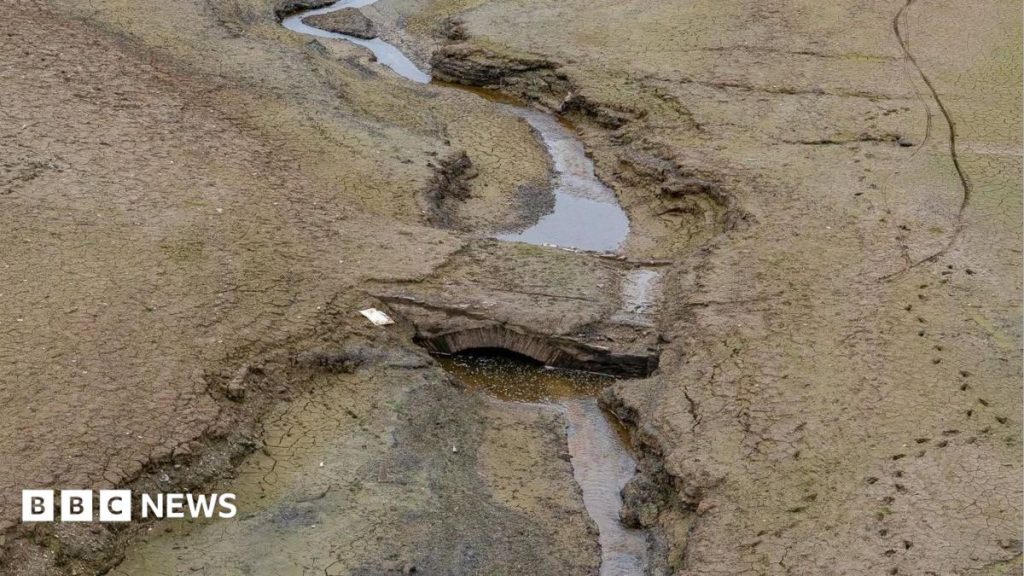
Months of dry weather and prolonged heat have revealed a bridge dating back to the Victorian times that had been submerged during the creation of a reservoir.
The ancient stone Bessom Bridge flooded nearly 50 years ago when Wimbleball Reservoir was created at Exmoor National Park in Somerset. It was later replaced by a new bridge.
In the summer, the Environment Agency declared that Wimbleball was one of the top three lowest reservoirs in the country after levels were recorded as "exceptionally low".
Dr Lucy Shipley, historic environment record officer for Exmoor, said: "We live in an ever-changing world and it's not a kind of fixed point where things stay the same."
Teenage boy, 16, killed in motorbike crashPublished16 hours ago
Teenage boy, 16, killed in motorbike crash
Complaints about animal sales at Bridgwater FairPublished18 hours ago
Complaints about animal sales at Bridgwater Fair
Ted Lasso honours Anthony Head with fresh tributePublished21 hours ago
Ted Lasso honours Anthony Head with fresh tribute
Shipley said there were other archaeological finds beneath the lake which were not demolished before the reservoir were created, including a barrow dating back to the Bronze Age.
It is not known why some structures were demolished and others were not.
The former Bessom Bridge used to cross a stream that fed into the River Haddeo, while the new one crosses the north side of the lake.
When water levels drop, the old bridge can be seen from the new one.
Shipley said the changing landscape on Exmoor was "extraordinary".
"The photographs are incredible, they're just so dramatic of the bridge poking out from the silt and sediment that's covered it.
"We live in an ever-changing world and it's not a kind of fixed point where things stay the same, but then by contrast… there's been a consistency of settlement and people living in farming and working in similar ways, so it's that balance of understanding how the world around us is always changing and responding, but also recognising that some things are really consistent over time."
She added that the historic bridge could be enjoyed from afar and asked visitors to refrain from walking on the dried-up section of the reservoir.
Elsewhere around the county, traces of centuries-old gardens were found in Bishop's Palace in Wells, while relics of old structures were uncovered at Glastonbury Abbey due to the record-breaking summer temperatures.
Wimbeball Reservoir, which supplies water to hundreds of thousands of homes across the South West, has a capacity of 21,320 megalitres – one megalitre is a million litres.
The reservoir remains low following record-breaking temperatures over the summer, with a current capacity of only 21.1% as of 27 September, according to South West Water.
Hundreds of thousands of people remain under hosepipe bans across the country while water sources recover from the prolonged dry weather.
The National Drought Group said the recent rain has not been enough to replenish supplies, with drought only being over when rivers, groundwater and reservoirs return to normal levels.
Research from the Environment Agency showed the country will need 120% of typical rainfall over the next seven months for all areas to be considered out of drought.
Follow BBC Somerset on Facebook, external and X, external. Send your story ideas to us on email or via WhatsApp on 0800 313 4630.




Discussion