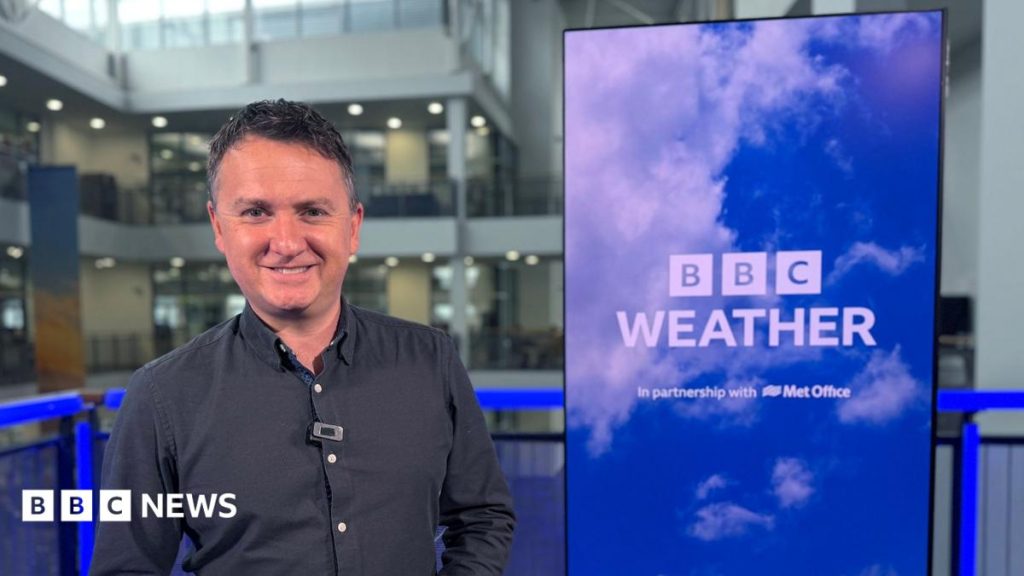
The BBC has said it will offer more regional, digital and 10-day weather forecasts under a new partnership with the Met Office, which begins on Thursday.
The collaboration, announced last year, aims to bring together the Met Office's weather and climate intelligence with the BBC's journalism and reach, the broadcaster said.
Director general Matt Brittin said the partnership would mean "serving our audiences with the most accurate, reliable and helpful weather service we can".
But the launch comes during a savings drive at the corporation, which has seen some other weather services and bulletins dropped as part of wider cuts.
The new Met Office partnership is unrelated to the cuts and was announced last July, before the BBC embarked on its latest round of savings.
The BBC said the partnership includes:
A new hourly forecast on the BBC News website and app covering 10 days, with improved medium-range forecasts
Met Office severe weather warning notifications via the BBC Weather app
More local and more digital weather reports, and more forecasts fronted by local weather presenters
More "content collaboration on BBC and Met Office channels" using Met Office expertise, and helping to explain weather and climate
There will also be Met Office branding on weather reports, and a new BBC weather centre based in the agency's headquarters in Exeter.
Brittin said the collaboration would involve "turning science into stories and helping audiences make informed decisions with our forecasts".
Met Office chief executive Penny Endersby said: "Today is a landmark moment as the Met Office and the BBC join forces to give even more people across the UK access to Met Office's accurate and trusted weather information."
She added: "Our new partnership with the BBC combines the Met Office's world-leading science with the BBC's incredible reach, giving a powerful opportunity to bring the story of our changing weather and climate to millions more people."
A previous partnership between the BBC and the Met Office ended in 2018.
Since 2018, the BBC's data for its weather forecasts has been provided by the Dutch MeteoGroup, which was later acquired by US weather services company DTN.
Separately, the BBC has dropped or shortened a number of national television and radio weather bulletins in recent weeks, as the corporation continues to work towards a £500m savings target.
Some weekend and late-night forecasts have been dropped from the TV schedules, with regional presenters instead now delivering a UK-wide weather outlook during their presenting slots.
Listeners have also complained about programmes such as Radio 4's PM no longer delivering a full weather bulletin, with presenter Evan Davis instead reading a short summary and directing listeners to the BBC website for a more detailed forecast.
The BBC said it was changing its weather team to better serve digital platforms, in line with audience research and changing consumption habits.
The corporation said more users are accessing weather information via the BBC's app, website and social platforms, as the number of people relying on broadcast bulletins declines.
A spokesman for the corporation said: "The BBC is committed to providing a world-class public service for weather forecasting and information across our platforms.
"As we announced in July, we are making changes to the way we deliver weather information as more people are turning to mobile and the website for their weather forecasts. We also recognise that people want more local forecasts, along with the national picture, to help them plan their coming days more accurately.
"As such we are providing more digital and localised forecasts, as well as ensuring we still have appropriate national weather bulletins across the TV and radio."
BBC Radio 4's Today programme, BBC Breakfast and the weekday editions of BBC One's News at Six will retain their usual national weather forecasts.



Discussion