Many patients who are diagnosed with the disease are reluctant to tell their families
Azhar Al-Ruabie is a freelance journalist in Iraq
Hassan Mehdi never imagined that telling his family he had contracted HIV would cost him his home and his family.
The initial symptoms of the virus weren’t too worrying: a skin allergy, a rash, and swollen lymph nodes in his neck. The dermatologist told Mehdi, not his real name, that he was probably suffering from a seasonal allergy. But he then began to think about his dating and sexual history and did an HIV test at home. A faint line appeared, indicating it was positive. “I tested once again at home and got the same result,” he said.
His worst fears were then confirmed by doctors at a public HIV centre.
“Mentally and psychologically, I collapsed,” Mehdi told The Telegraph, his voice thick with pain. “I decided to take a break and leave my job as a graphic designer, and I shut myself in my room.”
The doctor urged Mehdi to tell his family about the diagnosis. He also asked him to sign a paper promising to disclose his status if he married, not to stop treatment and not get a tattoo. It also warned that he could face legal consequences if someone accused him of spreading the virus.
When he finally broke the news to his mother, he hoped she would support him. But instead, he was met with hostility.
He said: “After informing my mum, she started to spread the news with my relatives, and they warned her that if I stayed at home and mixed with them, I would infect them all. Additionally, my elder brother heard and told me: ‘If I see you in the street or anywhere else, I will kill you.’ That was the last sentence I heard from him before I packed my bag to leave home forever,” he said.
“I lost my family when I told them I had HIV,” he adds. “To a religiously extreme family, HIV/Aids is taboo,” he added.
To fight the virus and adjust to a new life away from the town where he grew up, he immersed himself in gym workouts, a strict diet, and his treatment regimen. Close friends, social gatherings, and special cultural events became his sanctuary.
HIV is generally stigmatised in Iraq and across the Middle East. Mehdi finds it difficult to talk about his illness with friends or even doctors. So he began talking to ChatGPT and asking it about his treatment and how his life with HIV is likely to pan out.
Dr Riyadh Abdulameer Al-Hilfi, head of the general health directorate at Iraq’s Ministry of Health, agreed that HIV-related stigma is the main challenge for many people with the virus. “No one is prepared for people to know that they have HIV – it is difficult,” he said.
Dr Al-Hilfi added: “Some prominent Iraqis known to be HIV-positive seek treatment abroad to avoid being judged or discovered by society.”
In 2025, 902 people tested positive for HIV across Iraq, mostly young men, but the infection remains far below epidemic levels, says Al-Hilfi .
According to the UNAIDS 41 million people were living with HIV worldwide in 2025. That year, 1.2 million people newly acquired HIV, and half a million people died from Aids-related illnesses.
In the Middle East/North Africa region, UNAIDS estimates that 240,000 people were living with HIV in 2025, alongside 22,000 new HIV infections and 6,600 Aids-related deaths.
The HIV/Aids control programme was adopted by the Iraqi Ministry of Health in 1987 in response to the first case detected in the country, when blood for haemophiliacs was found to be carrying the virus. The virus is believed to have entered Iraq through imported products supplied by a French company.
“That year between 4,000 to 4,700 people were diagnosed with HIV; some patients have died, but many are under treatment and in good health,” Dr Al-Hilfi added.
In recent years, the majority of people with HIV have been detected through routine blood screening. “Patients rarely cite sexual practices as the cause, and around 40 per cent say they do not know how they were infected.”
Dr Al-Hilfi stressed that anyone who adheres to the medication can live a healthy life, and that effective treatment means that HIV/Aids has become a manageable chronic disease.
However, patients complain that the HIV drug currently available can lead to side effects. It is a three-drug combination therapy manufactured in Iran which Mehdi says has led to nausea, headaches and weight loss. Other HIV patients have taken to social media to describe additional side effects from the Iranian-made drug.
“My body weight was 73kg, today I am 65kg,” Mehdi said. “But it is free of charge in state-run hospitals, so I had no option but to take it, rather than paying privately,” he said.
Instead of his daily pill he wishes he could access the long-acting injectable treatments available in Western countries.
Many Iraqis with suspected HIV avoid government health centres for testing as they worry they will share their information with security agencies, so testing numbers under-represent cases. The Telegraph spoke with patients who said it was only the free treatment that compelled them to attend.
But Dr Al-Hilfi insists that confidentiality is paramount. “Personal details are shared only with doctors, nurses and pharmacists. Security agencies once requested the names of HIV-positive patients, but we [the ministry of health] refused to share them,” he said.
In a Facebook group called “HIV in Iraq,” which has 1,700 members, Iraqis share information, their experience of living with HIV, and the challenges they face. Many share their struggles with getting hold of medication.
Mehdi and others complain that during official holidays they are unable to obtain their medication, or that doctors don’t supply the full course.
“Denying a patient the full course would be ‘abuse’ in the doctor-patient relationship,” said Dr Al-Hilfi.
The discrimination, bullying and stigma that HIV/Aids patients face has led Dr Fadhil Hussein Al-Shibly, a retired infectious diseases specialist with many years experience treating HIV, to tell his patients they are not criminals.
However, some doctors do not follow his lead.
“Ignorance unfortunately exists among doctors,” Dr Al-Shibly added. He has known surgeons refuse to operate on HIV positive patients for fear of contracting the virus.
Al-Shibly likens this to a firefighter refusing to attend a blaze because they are afraid of fire.
In the HIV center at Al-Karamah Teaching Hospital in Baghdad, Dr Maha Abdulkareem, sees about 20 to 30 patients a day. On the day The Telegraph visited the hospital five of these patients were new.
“Before I worked here I didn’t realise there were many people in Iraq living with HIV,” she said.
Dr Abdulkareem added: “I provide psychological support and do not frighten the patient about HIV. I tell them it is a chronic disease that remains for life, and we treat it as if we are treating diabetes.”
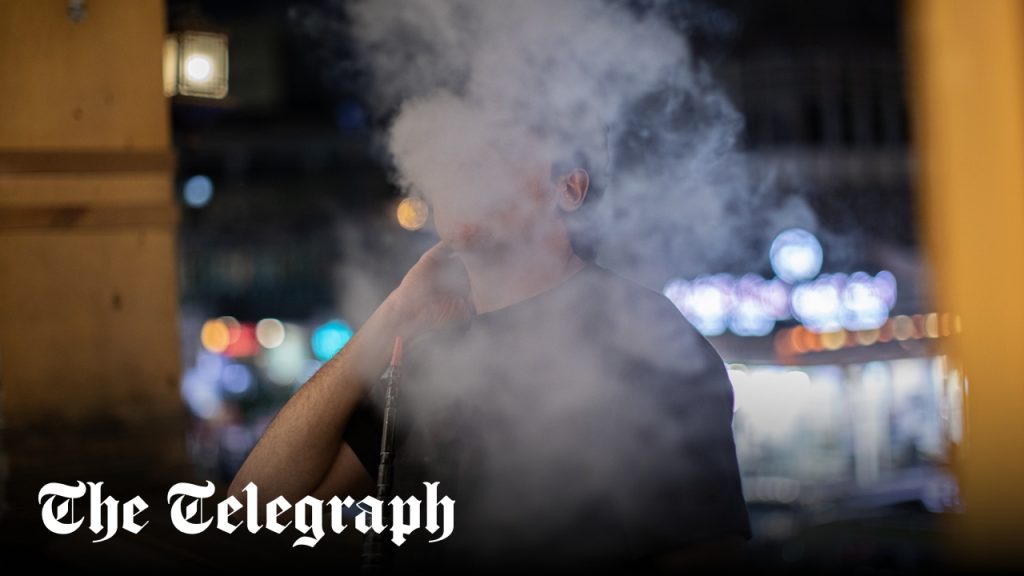
Mehdi, speaking as he sat in a café smoking shisha, agrees: “The one thing I would urge people to hold onto is this: HIV is not a death sentence. You can live with it healthily and normally, and I’m proof of that.”
Protect yourself and your family by learning more about Global Health Security
More coverage

UK lost more than it gained from Brexit, Burnham to say ahead of EU summit

Discussion